Liquid Bulk Terminal Cluster
Port Central was designed to become one of South America's leading hubs for liquid bulk cargo, energy, and maritime services. Strategically located in the center of the Brazilian coastline and close to the country's main oil and natural gas producing basins, the development offers ideal conditions to support the entire oil, gas, fuels, and energy value chain.
According to its master plan, Port Central includes 13 licensed deep-water berths and a large tank storage area dedicated to liquid bulk operations, enabling the development of an integrated infrastructure designed to meet both current and future market demands.
Port Central is being developed as a comprehensive one-stop-shop solution, bringing together a wide range of logistics, industrial, and energy activities within a single location, including:
- Oil transshipment operations;
- Import, export, and distribution of liquid bulk cargo;
- Liquid bulk storage facilities;
- Natural Gas Terminal for LNG unloading and regasification;
- Fuel supply services, including marine fuel bunkering;
- Maritime navigation and offshore support services;
- Infrastructure for processing industries and energy-related businesses.
The combination of deep-water access, extensive land availability, connectivity to major logistics infrastructure, and a strategic location enables Port Central to serve producers, traders, logistics operators, distributors, refineries, and energy companies through an integrated platform designed for long-term growth.
Phase 1 – Liquid Bulk Terminal and Ship-to-Ship (STS) Operations
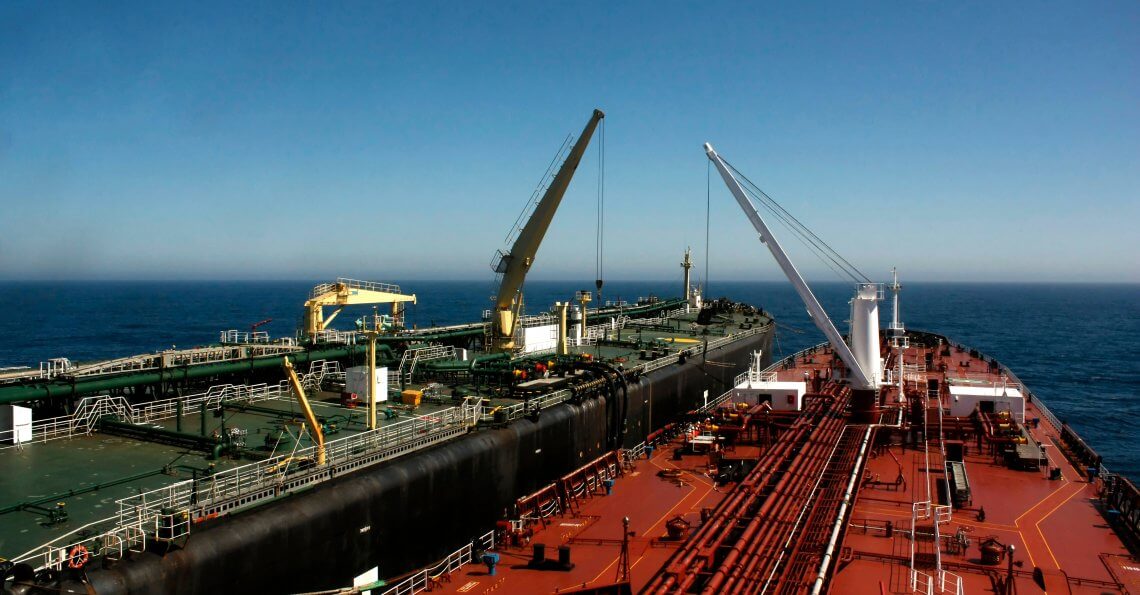
Phase 1 of Port Central marks the beginning of one of Brazil's most strategic logistics and energy hubs. Currently under construction, this phase includes a deep-water liquid bulk terminal primarily dedicated to oil transshipment operations between vessels, internationally known as Ship-to-Ship (STS) operations.
With water depths of up to 25 meters, Phase 1 is licensed for four berths dedicated to oil operations, capable of accommodating Very Large Crude Carriers (VLCCs)—vessels with a carrying capacity of approximately two million barrels of crude oil that operate on the world's main oil export routes.
How STS Operations Work
Ship-to-Ship (STS) operations involve the transfer of crude oil between two vessels. During the operation, a shuttle tanker transfers its cargo to a conventional ocean-going tanker positioned alongside using specialized transfer systems.
At Port Central, these operations are carried out within a protected port environment, providing high standards of operational safety, logistical efficiency, and operational reliability for customers.
Once the cargo has been consolidated, the export vessel proceeds to international markets, generating economies of scale and enhancing the competitiveness of Brazil's oil export chain.
Greater Efficiency, Safety, and Operational Availability
Port Central was developed to meet the oil industry's growing demand for more efficient, safer, and more reliable logistics solutions.
With deep-water infrastructure capable of receiving the largest vessels in the industry, Phase 1 is licensed for four berths dedicated to oil operations, allowing simultaneous transshipment activities. This infrastructure expands the export capacity available to the market while providing greater flexibility and predictability for customers' logistics planning.
By combining scale, operational availability, and a strategic location, Port Central offers a solution designed to support the continued growth of Brazil's oil production while establishing a new energy and export hub for the country.
In addition to STS operations, the planned infrastructure will enable future integration with storage facilities, liquid cargo handling operations, and other services supporting the oil, gas, and energy value chain.
A New Energy Hub for Brazil
The development of Port Central is aligned with Brazil's growing need to expand its logistics and energy infrastructure.
Its strategic location, deep-water infrastructure, significant expansion capacity, and integrated master plan provide the conditions required to support the entire logistics chain of the energy sector.
More than a port terminal, Port Central is being developed as an integrated energy hub capable of connecting oil transshipment, storage, distribution, fuel supply, natural gas, offshore support services, and industrial activities within a single complex, contributing to greater logistics efficiency and enhancing Brazil's competitiveness in global markets.