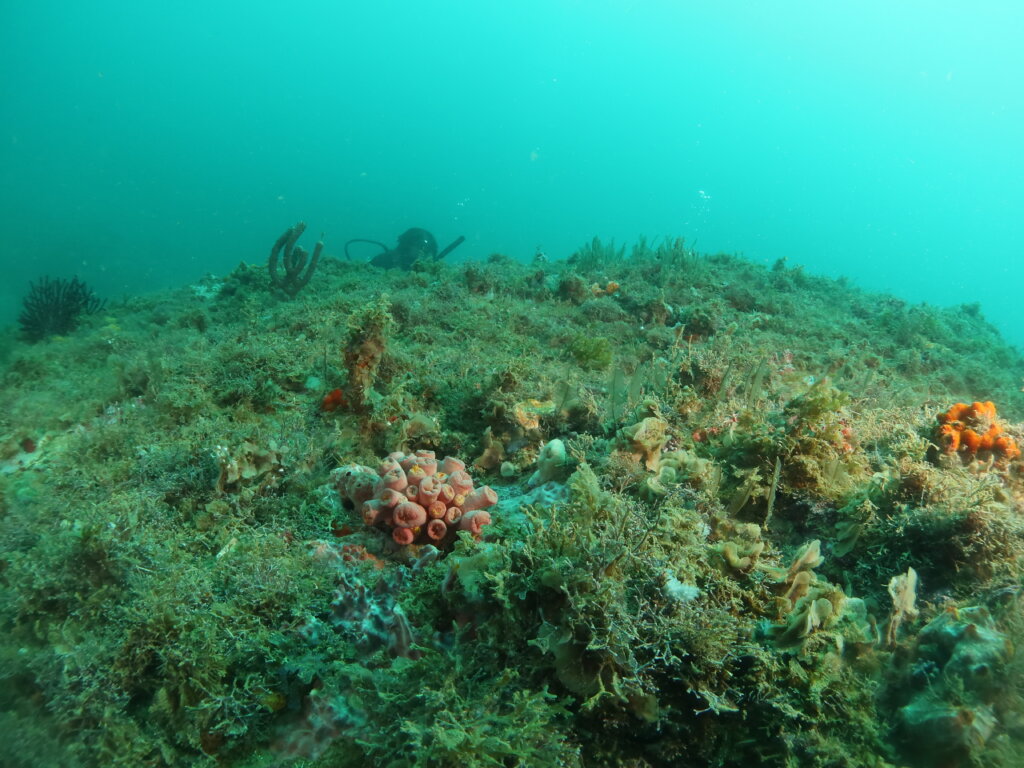
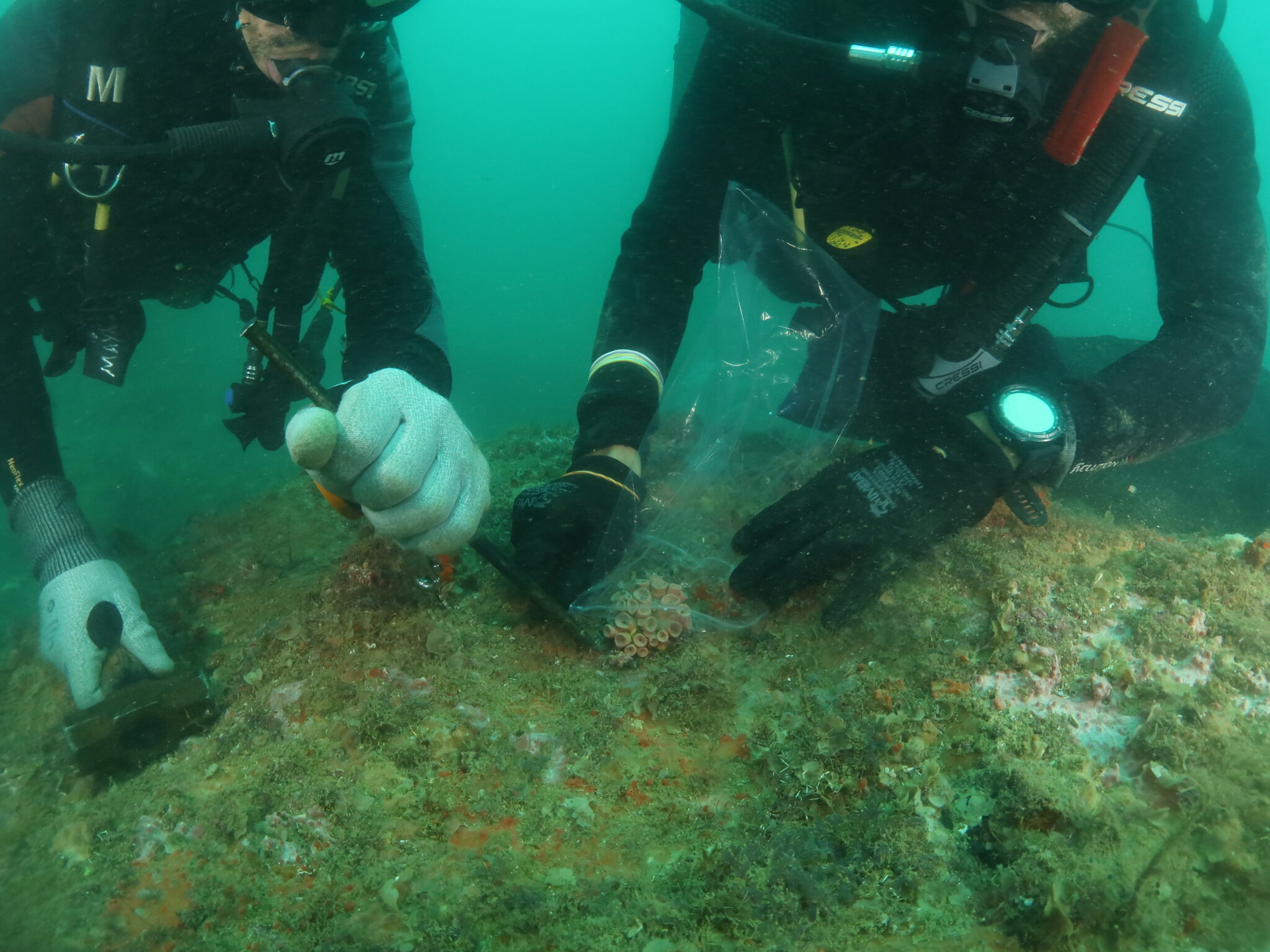
Initiative coordinated by Iema (Espírito Santo State Institute for Environment and Water Resources) resulted in the removal of more than 6,000 sun coral colonies from protected marine areas in Guarapari.
Porto Central is contributing to the conservation of Espírito Santo's marine ecosystems by participating in efforts to control sun coral, an invasive alien species that threatens marine biodiversity. The initiative includes removal, monitoring and assessment of the recovery of managed areas.
The activities were carried out between March and June 2026 in the Setiba Environmental Protection Area (APA), Rasas Islands and Escalvada Island, in the municipality of Guarapari, Espírito Santo.
Why control sun coral?
Native to the Pacific Ocean, sun coral is an invasive alien species that colonizes rocky shores and natural reefs, competing with native marine organisms such as corals, sponges and algae. Its rapid spread reduces biodiversity and disrupts the ecological balance of marine ecosystems.
Controlling the species requires specialized techniques to prevent its spread. During the operations, every colony removed was immediately placed in appropriate containers to prevent the release of larvae into the water. In areas where manual removal was not feasible, Porto Central and Iema jointly developed a burial neutralization technique, applied in crevices and other hard-to-access locations.
Results achieved
Throughout the field expeditions, the teams surveyed more than 9 kilometers of submerged areas, conducting inspections and management activities at previously mapped sites as well as newly identified infestation areas.
Key results include:
> 6.045 sun coral colonies removed;
> 130,7 kg of invasive biomass removed from the marine environment;
> 19 managed sites manejados, including eight newly identified infestation areas;
> More than 260 hours of underwater work dedicated to monitoring and removal activities.
Commitment to environmental conservation
Porto Central's participation in this initiative reinforces the company's commitment to biodiversity conservation and to complying with the environmental requirements associated with the development of the port complex.
In addition to meeting environmental licensing commitments, the initiative contributes to the technical efforts coordinated by Iema to protect Espírito Santo's marine ecosystems and contain the spread of sun coral.
Learn more
What is sun coral?
Scientific names: Tubastraea tagusensis and Tubastraea coccinea
Origin: Pacific Ocean
Why is it a threat?
> Competes with native species for space;
> Grows rapidly;
> Reduces marine biodiversity;
> Alters the ecological balance of reef ecosystems.
How is it controlled?
> Manual removal by specialized divers;
> Immediate containment of removed colonies to prevent larval dispersal;
> Continuous monitoring of managed areas;
> Burial neutralization in locations where manual removal is not feasible.