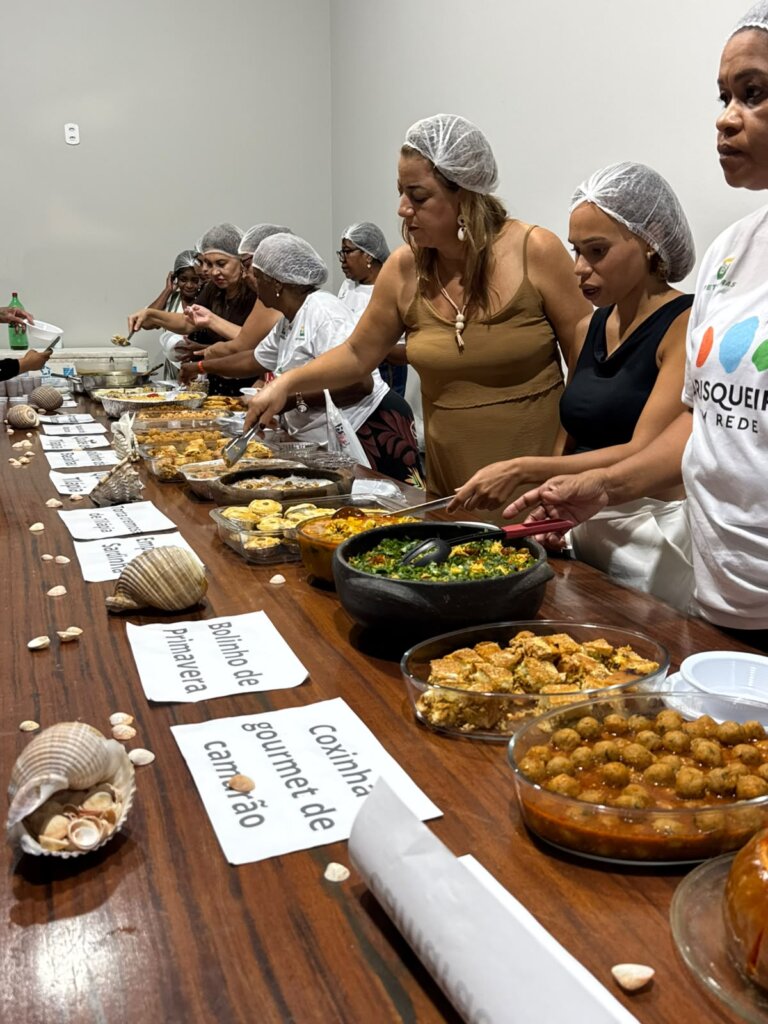
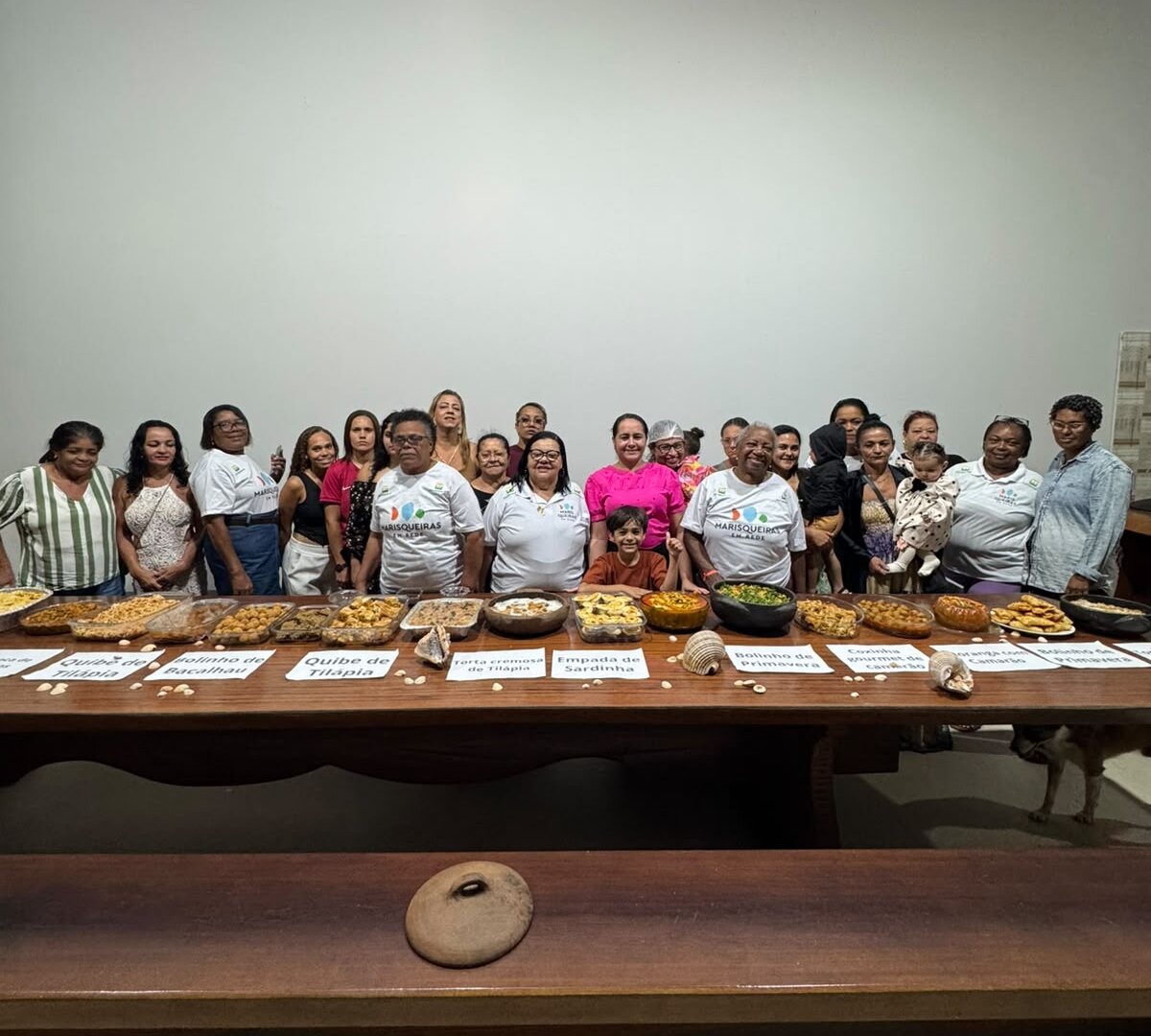
Flavors, stories, and new possibilities came together during a special evening in Marobá, in Presidente Kennedy. Around 25 women, including shellfish gatherers and artisanal fishers, presented dishes developed through a training process carried out within the community.
Sponsored by Porto Central, the activity brought together knowledge, creativity, exchange of experiences, and appreciation of local cuisine. The recipes ranged from traditional dishes, such as moqueca, to original creations, including shrimp meatballs.
The tasting marked a preparatory stage for the Delícias de Marobá Seafood Festival, planned for the beginning of the summer season.
The participants themselves prepared the dishes and invited the public to taste them and share their impressions. “The idea was to gather feedback, identify opportunities for improvement, and refine the recipes,” explains Marilan Araújo Deles, field agent for Petrobras’ Marisqueiras em Rede Project and a participant in the initiative.
For Gizelia Machado Rangel Lúcio, the experience reinforces the potential of the initiative. “It is a very positive development for the region. The dishes are excellent, and I believe it would be very interesting to hold a larger event, a festival, as happens in other places.”
Partnership to strengthen local initiatives
By sponsoring initiatives like this, Porto Centrall seeks to contribute to the appreciation of local vocations, the strengthening of income-generating opportunities, and the recognition of the knowledge and traditions present in Presidente Kennedy’s fishing community.
The partnership is also connected to Porto Central’s community engagement efforts, supporting initiatives built around the needs, knowledge, and potential of the local territory.
Throughout this process, the women of Marobá remain at the center of the initiative, transforming knowledge and experiences related to artisanal fishing, shellfish gathering, local cuisine, and handicrafts made from waste generated by the fishing production chain into new opportunities for entrepreneurship, cultural appreciation, and the strengthening of sustainable tourism.