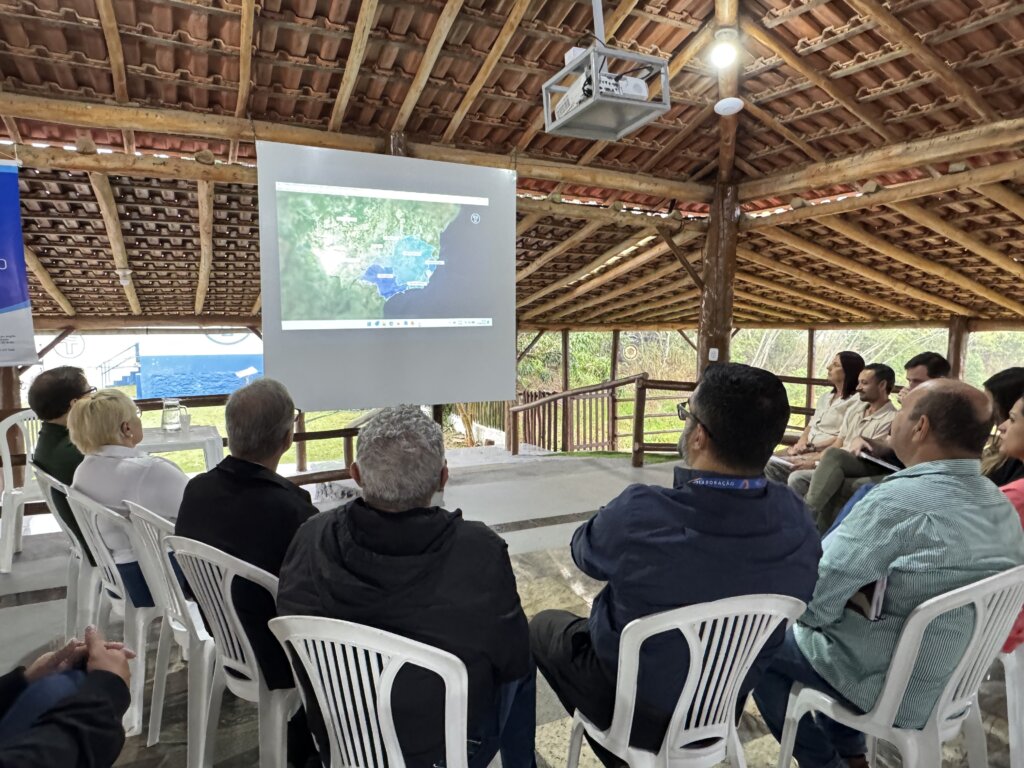
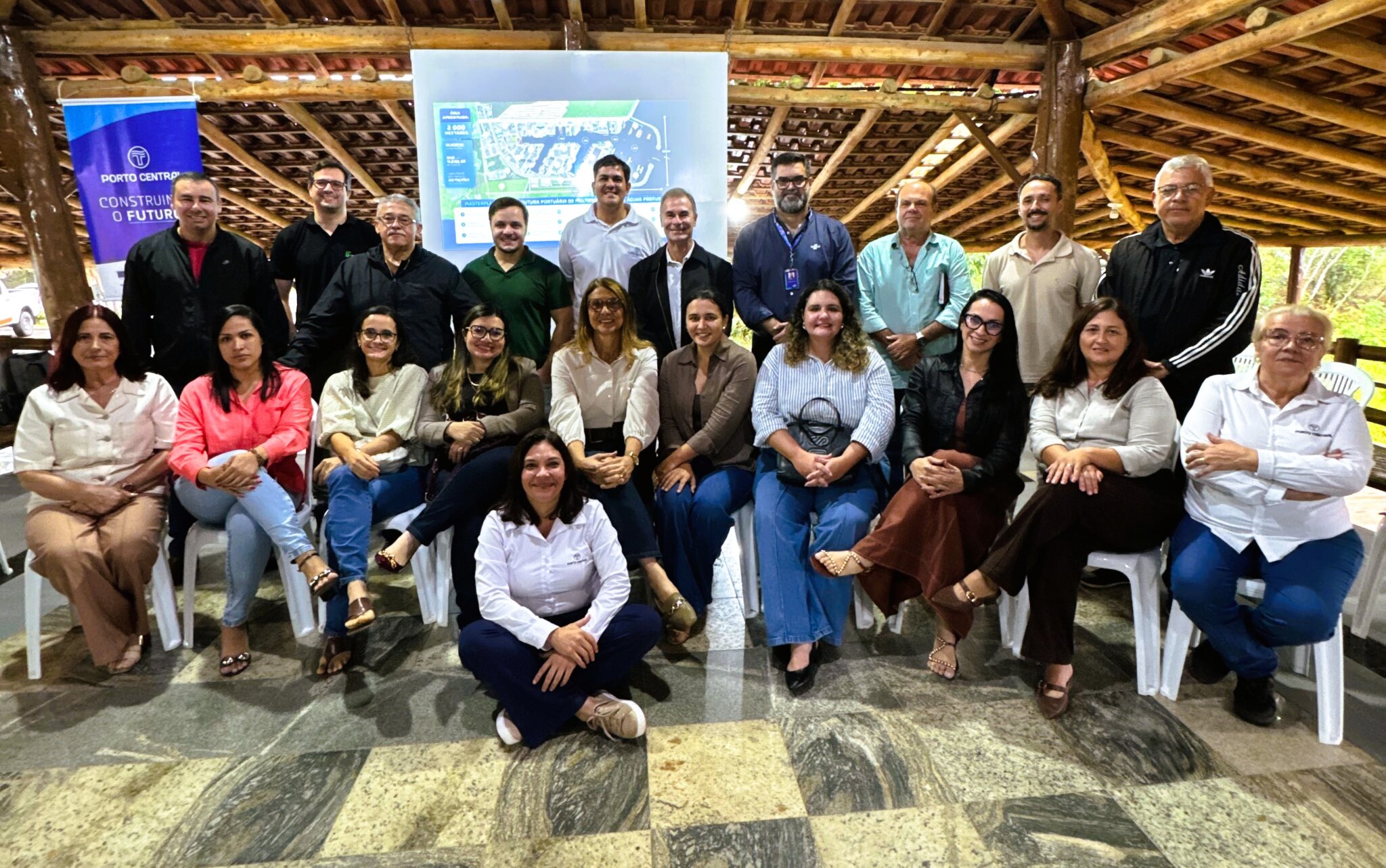
Meeting held at Porto Central brought together representatives from Presidente Kennedy, Marataízes and São Francisco de Itabapoana to share information on the economy, infrastructure and the labor market
Last week, Porto Central held another meeting of the Socioeconomic Monitoring Program Follow-up Committee (CAMPOC) in Presidente Kennedy, Espírito Santo. The meeting was led by Working Group 1 (WG 1), which focuses on Economy and Finance, Infrastructure and the Labor Market.
Representatives from the three municipalities within the project’s Direct Area of Influence (AID) took part in the meeting: Presidente Kennedy and Marataízes, in Espírito Santo, and São Francisco de Itabapoana, in Rio de Janeiro.
During the meeting, representatives shared information about their municipalities, including data related to WG 1’s areas of focus. The exchange helped broaden the understanding of the characteristics, challenges and prospects of each territory, as well as the socioeconomic dynamics of the region where Porto Central is located.
Regional development on the agenda
The meeting also featured a presentation on ParkLog Sul Capixaba, an initiative of the Espírito Santo State Government focused on regional development and the integration of logistics, industrial and energy assets. The topic broadened the discussion on prospects for southern Espírito Santo and their connection to the transformations monitored by CAMPOC.
Municipal participation is one of the pillars of the Committee. Sharing local information allows socioeconomic monitoring to take into account the characteristics of each territory while also identifying issues shared across the region.
This work strengthens dialogue among Porto Central, public authorities and institutions operating in the region and contributes to monitoring socioeconomic changes in the project’s Direct Area of Influence through semiannual surveys conducted as part of the Socioeconomic Monitoring Program.
The Program includes the Committee for Monitoring the Results of Socioeconomic Indicators (CAMPOC) as a democratic forum for discussing monitoring results and proposing, whenever appropriate or necessary, complementary measures to prevent negative social impacts and enhance positive ones.