


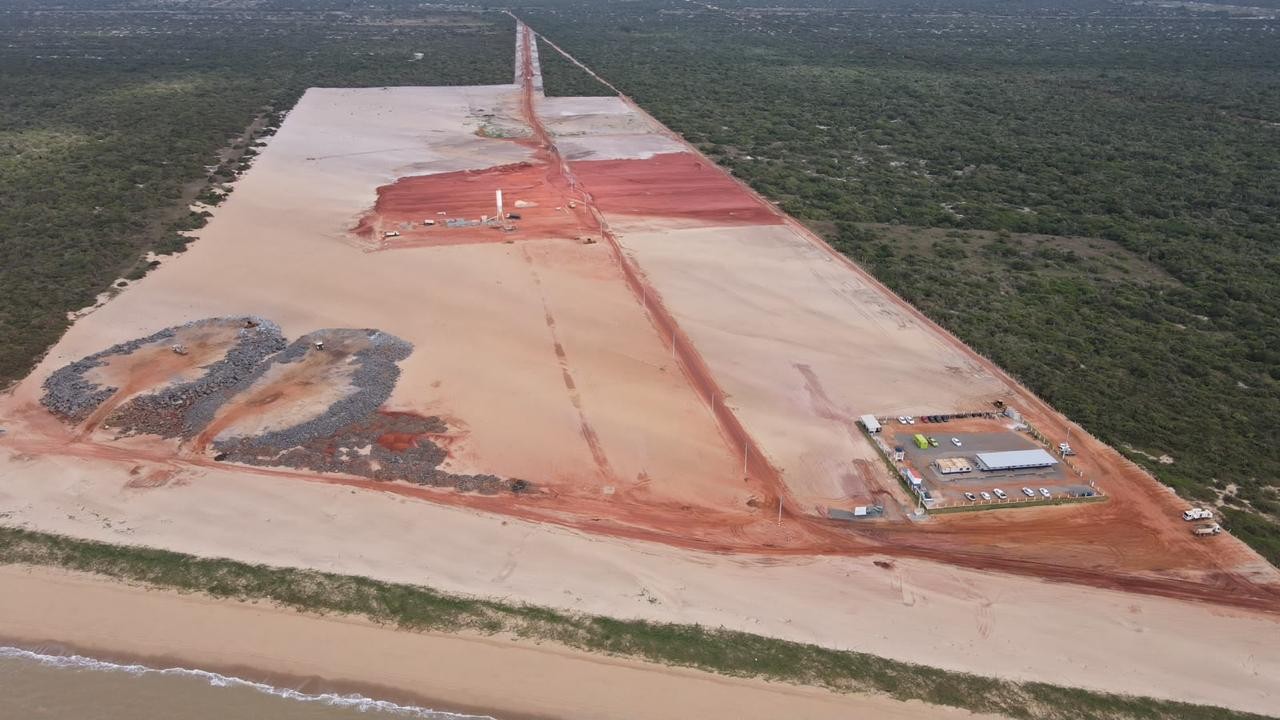
With onshore infrastructure in place, rock production and transportation underway, and the concrete batching plant installed, the project advances preparations for the breakwater and dredging works.
The implementation of Phase 1 of Porto Central continues to transform the project site in Presidente Kennedy. Since construction began, different work fronts have advanced in site preparation and in the installation of the infrastructure required for construction.
Initial activities focused on site preparation. This was followed by the construction of internal roads, water supply and power systems, as well as other support infrastructure required for construction activities.
Today, these work fronts operate in an integrated manner and support the development of Porto Central’s first terminal.
Site preparation paves the way for new infrastructure
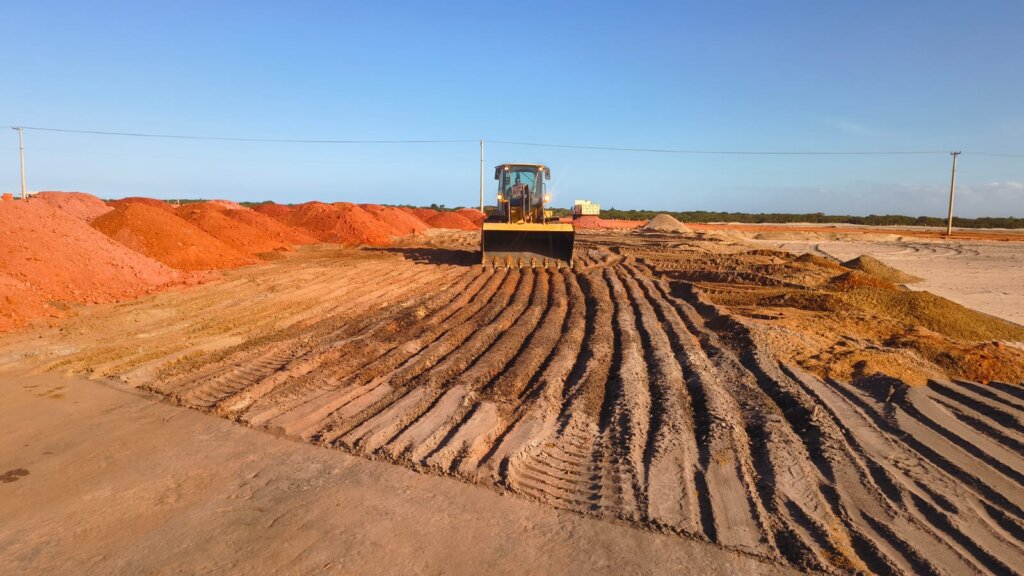
One of the first major stages of Phase 1 involved preparing the approximately 65-hectare area designated for the development of the port infrastructure.
Following the initial vegetation clearing activities, land grading and earthworks were carried out, including excavation, cut and fill operations defined according to the elevations and specifications established in the engineering designs.
Beyond preparing the site, this stage lays the groundwork for the planned infrastructure and takes into account its integration with roads, drainage systems, utility networks and other components of the project.
Support infrastructure keeps pace with construction progress
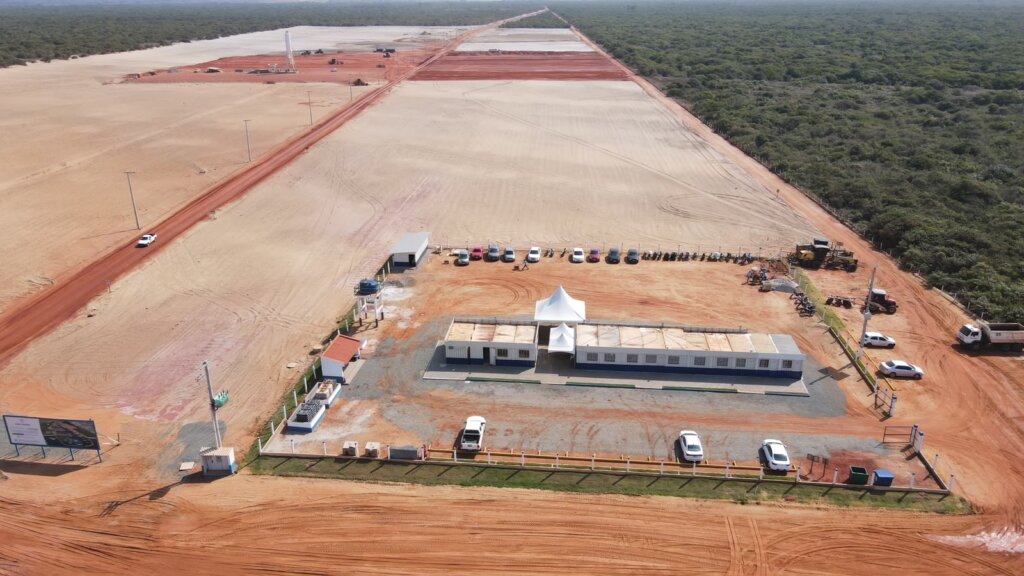
Alongside the site preparation activities, Porto Central has established the systems required to support construction operations.
Infrastructure and systems already in place include:
> an operational construction site;
> internal roads and access routes for circulation within the project area;
> a water supply system;
> power supply for the different work fronts;
> a concrete batching plant.
Together, these systems provide the conditions required for equipment circulation, receipt and storage of materials, and the simultaneous operation of the teams involved in construction.
The access routes between the quarry and Porto Central have also undergone improvements to support material transportation, including road widening, signage, fencing and adaptations for heavy vehicle traffic.
South Breakwater already mobilizes an extensive onshore logistics operation
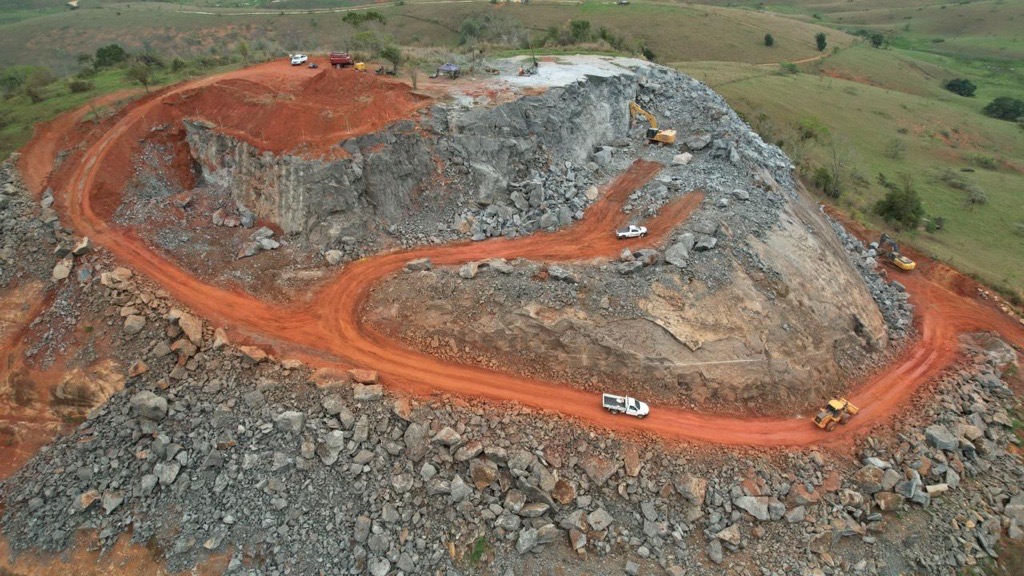
Current activities include the preparation of materials that will be used to build the South Breakwater, one of the main structures planned for Phase 1.
The rocks are sourced from a dedicated quarry located approximately 27 kilometers from Porto Central. Production is underway, and the material is continuously transported to the port area, where the stocks required for construction are being formed.
Building up this stock in advance is intended to ensure a continuous supply of material and reduce the risk of interruptions during construction of the South Breakwater.
Porto Central also has a concrete batching plant already installed at the construction site, which will support the production of concrete elements for the South Breakwater and other project structures.
Rock production, transportation and storage, together with concrete production capacity, form part of a logistics chain that must be established in advance to support a port project of this scale.
First terminal will support Brazil’s growing oil exports
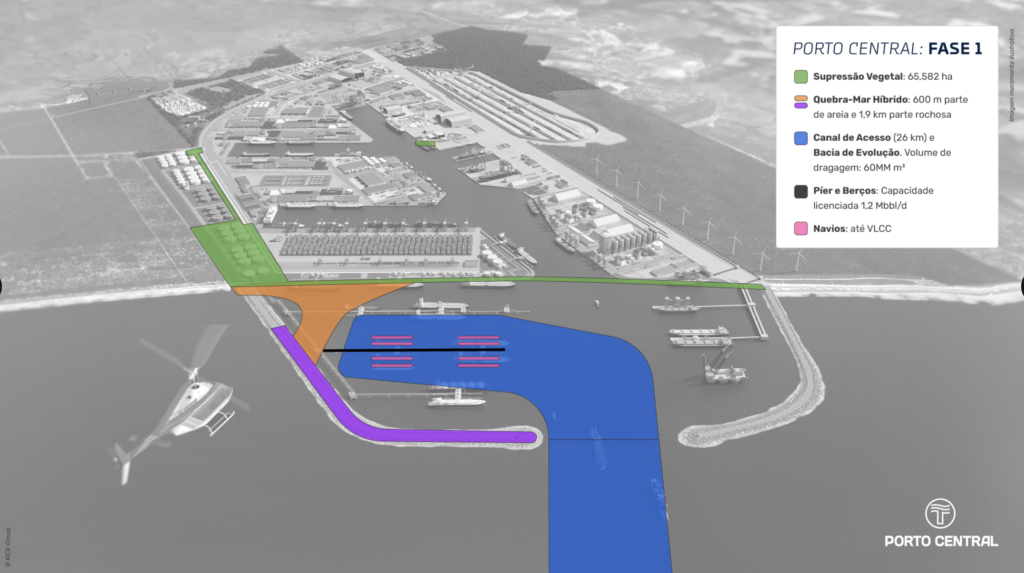
Phase 1 marks the development of Porto Central’s first terminal: a deepwater Liquid Bulk Terminal dedicated to ship-to-ship (STS) oil transfer operations.
The terminal was designed to expand the infrastructure available to support the export of Brazil’s growing oil production to international markets and to accommodate operations involving large vessels. Within the port’s protected waters, a shuttle tanker will be able to transfer its cargo to larger vessels, including VLCCs, which can carry approximately 2 million barrels of oil.
Phase 1 is licensed for the development of up to four berths dedicated to oil operations, with depths of up to 23 meters and capacity to accommodate VLCCs. The terminal already has contracts in place with major companies in the sector, including Petrobras, Equinor, CNOOC and Repsol Sinopec, demonstrating existing demand for the new infrastructure.
Phase 1 represents an investment of approximately BRL 2.6 billion and is expected to be completed within the next two years, when Porto Central’s first operations are scheduled to begin.
In 2026, the project also reached an important milestone in its capital structure with the approval of financing by Brazil’s Merchant Marine Fund (FMM). The financing agreement is currently being structured with financial institutions. The combination of physical construction progress and financial structuring strengthens the project’s readiness for the intensification of the next construction fronts.
Construction creates new opportunities for the region
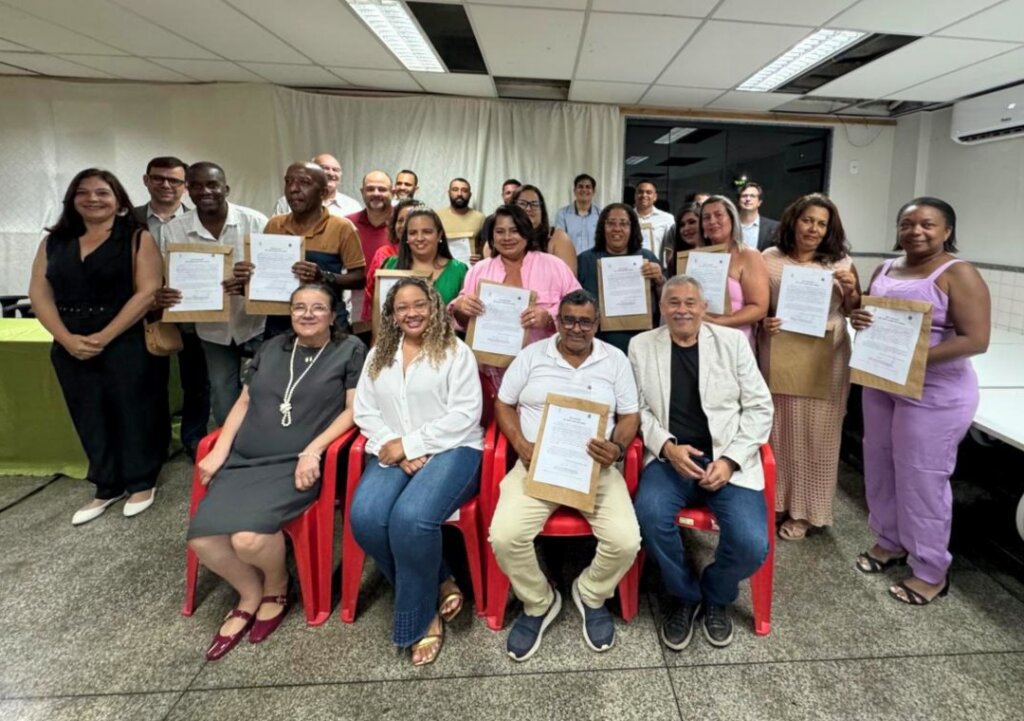
As construction progresses, workforce mobilization is also expected to increase. From 2027 onward, Phase 1 is expected to reach its period of highest workforce mobilization, with an estimated peak of up to 1,295 direct workers and priority given to hiring local labor.
Preparing the local workforce is already part of this process. Since 2025, the partnership between Porto Central and the Federal Institute of Espírito Santo (Ifes), Presidente Kennedy Campus, has delivered three training classes, qualifying 68 people, including construction workers and residents of municipalities within the project’s area of influence.
In August 2026, the partnership also advanced with the launch of Ifes’ Technical Program in Logistics in Presidente Kennedy, expanding professional training opportunities related to activities expected to grow in the region as Porto Central develops.
Environmental management and dialogue with the local area
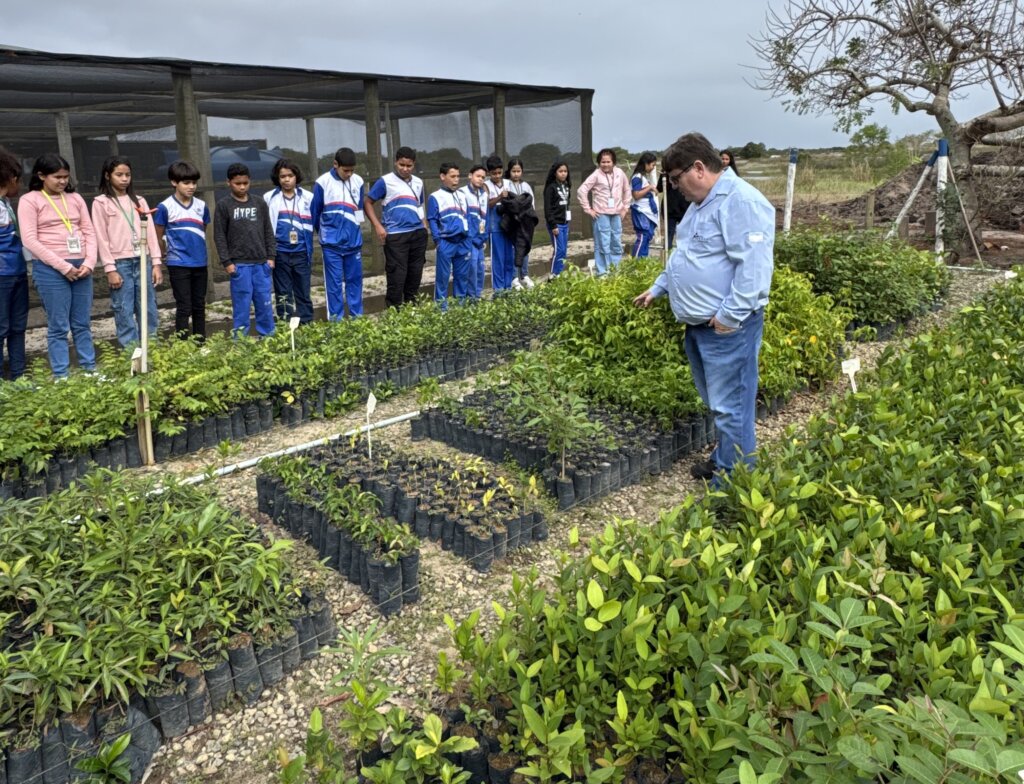
Construction progress takes place alongside the implementation of environmental and socio-environmental programs established under the federal environmental licensing process conducted by IBAMA.
These initiatives address topics including monitoring and protection of fauna and flora, water resources, the marine environment, traffic, fisheries, social communication, environmental education and socioeconomic monitoring.
Among the results achieved to date is the planting of more than 56,000 seedlings, which has contributed to the restoration of approximately 37 hectares. The forest compensation program aims to plant around 100,000 seedlings throughout Phase 1. All seedlings planted or donated are produced at Porto Central’s own nursery, following rigorous procedures and in accordance with the criteria established under the Flora Protection Program.
Engagement with the local area also forms part of the project’s development, through environmental education initiatives and an ongoing process of dialogue with communities and institutions within the area of influence. Particular attention is given to traditional communities and to compensation measures related to the project’s impacts, which are currently under negotiation, including the Fisheries Activities Compensation Plan.
Infrastructure designed to grow alongside Brazil
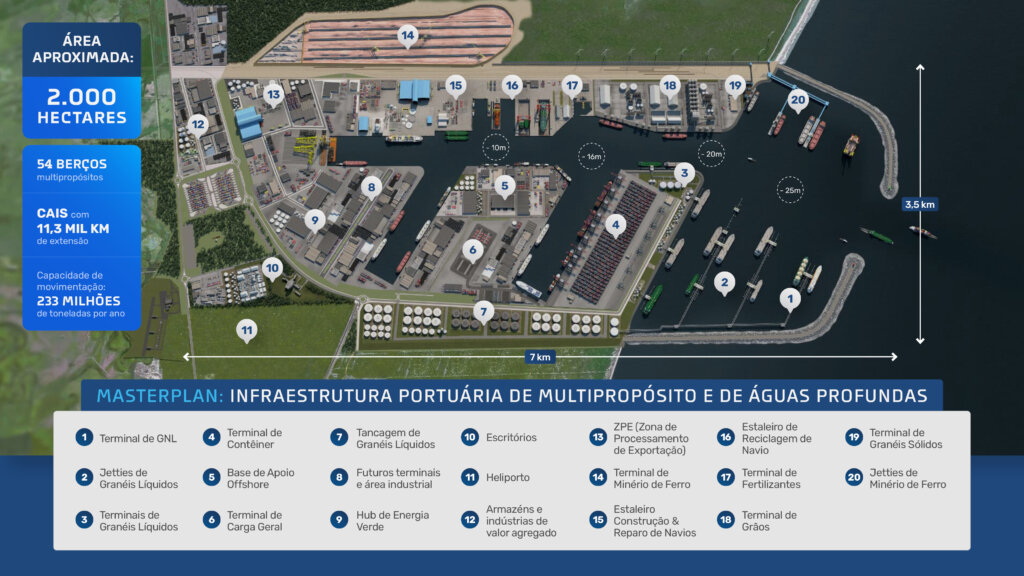
Phase 1 represents the first step in the development of Porto Central, conceived as a multipurpose deepwater industrial port complex to be developed in phases.
At full development, the port’s masterplan covers approximately 2,000 hectares, with depths of up to 25 meters and potential for up to 54 berths serving different terminals and supply chains.
In addition to liquid bulk, the long-term plan includes solid bulk, natural gas, containers and general cargo, as well as tank storage, vessel refueling, offshore services, shipyards, power generation and industrial areas. Future road, rail and pipeline integration will further expand the complex’s potential connectivity with major production hubs and consumer markets across the country.
Phase 1 therefore marks the beginning of the construction of a project designed to expand Brazil’s port capacity, attract new investment, support the growth of supply chains, strengthen the connection between Brazilian production and international markets, and contribute to the region’s economic development.